So, you are seriously considering taking the CFA exam and you might be looking for some information online, if so, congratulations you have come to the right place. I sat and passed the exam back in 2011 and I would be happy to share my advice here. Luckily, not much has changed since then with regards to the test format and the content so I believe that what I cover in this post is still valid for candidates preparing for the exam today.
Topics Covered
The CFA Institute provides here a detailed overview of topics which are covered in each level. Not all topics are weighted equally so successful candidates are good at identifying core topics and questions and are able to focus on these areas in their preparation. The learning focus according to the CFA Institute is “Knowledge and Comprehension” rather than “Application and Analysis” which will be tested in Level 2. In my opinion, Level 1 is all about the candidate gaining a general knowledge of all topics whilst grasping the foundation of investment analysis concepts which he/she will use later on in performing investment analysis.

Exam Format and Exam Strategy
The exam consists of a morning and afternoon part, each containing 120 multiple choice questions (to note that there is no negative marking so do not leave any questions blank). You will have 3 hours to complete the questions so you will be under a lot of time pressure. It’s important to avoid spending too much time on any single question so if you are not sure about a question, mark it and come back to it later. Aim not to spend more than 90 seconds on a single question, there won’t be long calculations involved so if you have a good mastery of the topic you should be able to come up with an answer relatively quickly. When I took the exam I aimed to finish the exam in an hour so I had the last 20-30 minutes to review my answers. As you take mock exams you will develop your own test taking technique but the key point that I want to get across is that pacing yourself is as important as your knowledge of the curriculum.
Study Resources
The moment you register for the CFA Institute you will get access to the Institute Curriculum which will be shared to you as an E-Book. I also recommend ordering the hard copies of the Institute books which will be sent to you via post. The whole curriculum consists of 6 thick volumes that will take a lot of space up and will be a perfect substitute-friend for the upcoming 6 months or so. The question that a lot of candidates ask themselves now is whether the Institute materials are enough or if they require some additional source of help in the form of study notes or video lectures. Schweser is a very popular choice amongst candidates. Others might also opt to take classes via other training providers. So, are training providers worth the additional cost? It really depends on the candidate’s background and circumstances in my opinion. If a person already has a good finance background and has time to commit in reading the curriculum I don’t think he/she needs to rely on training providers. If instead time is a constraint or finance is a new subject then possibly the additional help will provide to be valuable and worth it. Overall I think training providers have done a very good job in analysing the exam, identifying the key topics and ensuring that their students have a high chance of passing. My experience with them has been positive.

The Calculator is your Friend
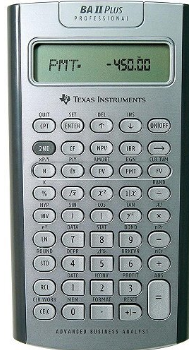
There are only two types of calculators that you will be able to take into the exam with you – read the official Calculator Policy here – Texas Instruments BA II Plus and Hewlett Packard 12C. If you have registered for the exam and you are in the early stages of your preparation my advice is to start getting familiar with the calculator as soon as possible. There are a lot of questions on the exam where you will need it and you will be able to quickly score valuable points. Some examples of where your calculator will come in handy are: Present Value/Future Value, Bond Calculations, NPVs (maybe some Statistics functions and Annuity calculations).
Last Words of Advice
- Remember to do the end of chapter questions in the official CFA books. All questions are of high quality and are very likely to be tested on exam day.
- Do not have a heavy lunch in between the morning and afternoon exam.
- Remember your exam ticket and passport on exam day otherwise you will not be able to sit the exam that day.
- Think of your study as a marathon not as a sprint, towards the final week of the exam do some light revision and preserve your energies for exam day.
- Get yourself a nice study group to have people who you can share your joys and pain with.
Thank you for reading and I hope you look forward to future posts.



 TheFinanceNerd