Taking a Club Officer Role at Toastmasters

In a past post, I wrote about my experience in joining a Toastmasters Club. As I am writing this post, around a year and a half has passed since and there is a lot that I have gained from my involvement in Toastmasters. I have enjoyed it so much that I am now part of three clubs (yes, that’s a lot of time committed to Toastmasters). For those of you who have never heard about Toastmasters, you can refer to my previous post where I provide a general overview but to sum it up, it’s an organisation that helps its members develop their presentation and leadership skills.

What I would like to focus on in this post is the valuable experience that I have gained from taking the club officer role of president at one of my clubs. Every Toastmasters Club is managed by designated club officers who help in the running of the club by taking on core responsibilities that are essential for growing and maintaining a healthy club. These individuals are ordinary club members who put themselves forward at the start of an office term (more details can be found here) and are elected via the club’s officer election process.

While my first year at Toastmasters was focused on my presentation skills and on working on my speeches, my second year has been focused more on my club officer role. I have seen a lot of seasoned toastmasters who are just happy focusing on their speeches and avoid taking club officer roles due to several reasons (time commitment, additional responsibilities, etc.) but I think this is a big mistake as there is so much value from being a club officer. I believe that by taking on a club officer role, members can truly focus on harnessing their leadership skills. In this post I am summing up some of my key learnings:



Continue reading

World Quant University (WQU)’s Applied Data Science Module

So, you are interested in Data Science and you have come across this free course offered by WQU and you are evaluating whether this course might be worth your time. In this post I will share my experience from having taken this course six months ago. WQU shared a list of key skills which are used on this course which can be found here. At first, the course starts with basic concepts of programming such as: defining variables, data types, loops, functions, classes, etc. It then builds on these core concepts and introduces key packages such as NumPy and Pandas which have ready made modules to read in data. I would say that the rest of module 1 can be summarised in transforming this data and querying it; it’s no coincidence that WQU put ‘Data Wrangling’ at the top of the skills list.

Continue reading

Re: Bloomberg Opinion Piece: “Wall Street’s CFA Program Is a Colossal Waste of Time”

On 17th August 2021, Bloomberg published an opinion piece titled “Wall Street’s CFA Program Is a Colossal Waste of Time ” and this post is a response to that article. The CFA Charter has very often been regarded as the gold standard when it comes to qualifications in the financial industry and this article has undoubtedly ignited some discussions, with subreddit threads such as this one being just one of the few examples. Calling the CFA program a “Colossal Waste of Time” seems to be a pretty bold statement and given that in the article the author (Jared Dillian) mentions that he passed level I but never completed the qualification, a lot of readers were quick to dismiss his opinion. The author also expressed his view that he favours MBAs over the CFA program which caused a slight digression towards the comparison of the two qualifications. However, some readers were eager to identify elements of truth in the article as they possibly mull over their options following the decrease in pass rates for the latest sittings.

Continue reading

My experience with the Open University (OU), Part 1

If you are reading this post, chances are that you might be considering studying at the Open University (OU) and you are searching online for information to help you make your final decision. 6 months ago I was in your position as I was frantically searching to see if my potential £18k investment in my education was justified. I was particularly interested in the below points which arguably are what might interest most prospective students.

– career prospects
– prospects for pursuing further studies
– course rigour
– teaching quality
– general experience

Continue reading

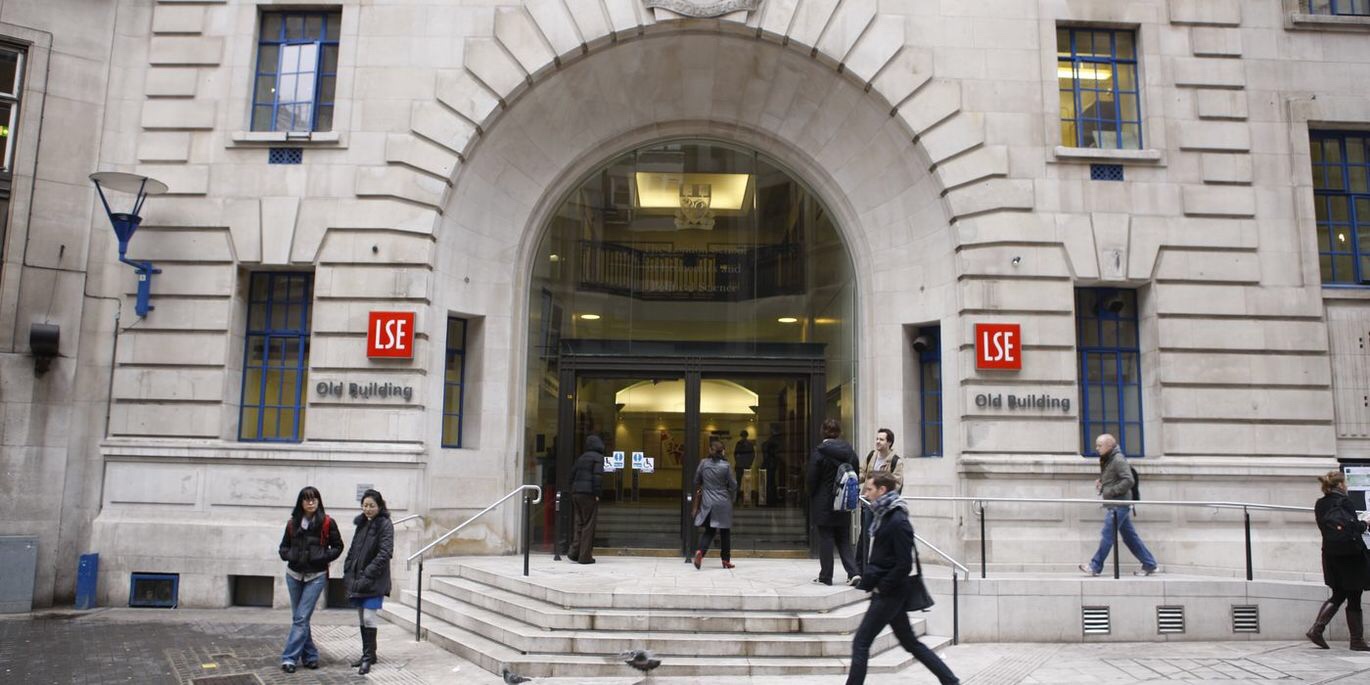
LSE Masters in Finance (full-time and part-time) Part 1: The Application Stage

Introduction
This post will cover LSE’s MSc in Finance and it will be divided into 3 separate parts: (1) Application Stage (2) Year 1 (3) Year 3.

Having graduated from the course myself, I would like to share some information which prospective students might find useful in evaluating the course prior to applying. As a disclaimer, I have no affiliation with LSE and with the exception of the factual information regarding the course, most of the content represents my personal opinion.

Continue reading