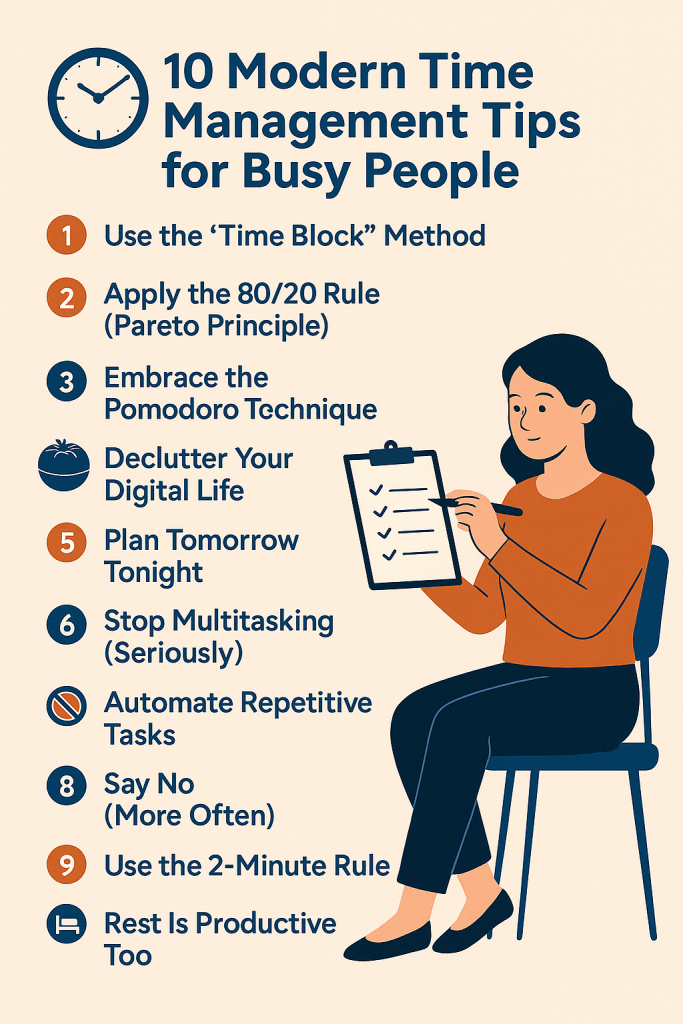
In today’s fast-paced world, time often feels like it’s slipping through our fingers. Between digital distractions, packed calendars, and the pressure to always be “on,” it’s easy to feel overwhelmed. But time management isn’t about squeezing more into your day—it’s about organizing your time around what really matters. Whether you’re working from home, raising a family, or managing multiple side projects, these ten modern tips can help you take back control and move through your day with intention and focus.
As my Toastmasters journey continues, I have been reaping a lot of the benefits from being an active member. In my last post, I spoke about how taking a club officer role helped me in working on my leadership skills. In this post, I would like to share with you my experience from entering Club Level, Area Level and Division Level competitions. A few years ago, the idea of entering a speech contest would have terrified me since I was never comfortable speaking in front of people. Competing in a speech contest was a goal that I wanted to work towards but one that I felt was of my reach, however thanks to the confidence that I built in delivering speeches at my club and thanks to the warm support of my club members, I was able to finally reach this goal.
I have recently completed the Accounting module which is the EMBA’s first module so in this post I will share some thoughts about my learning experience. In past posts, I gave a general overview about the EMBA but now that I have taken and completed a course, I can share more concrete details which I hope readers find helpful.
What does the Accounting module cover?
As the module’s name suggests, the course covers general accounting concepts such as ledgers, credits and debits, key financial statements, ratios and some aspects of managerial accounting. The unit also covers some non-accounting concepts such as general explanations of financial instruments such as stocks and bonds. It is quite a lot of material to cover over five weeks, especially if you are new to these concepts. I did a management degree for my undergraduate studies and these are concepts you would normally cover in 1-2 semesters.
In a past post, I wrote about my experience in joining a Toastmasters Club. As I am writing this post, around a year and a half has passed since and there is a lot that I have gained from my involvement in Toastmasters. I have enjoyed it so much that I am now part of three clubs (yes, that’s a lot of time committed to Toastmasters). For those of you who have never heard about Toastmasters, you can refer to my previous post where I provide a general overview but to sum it up, it’s an organisation that helps its members develop their presentation and leadership skills.
What I would like to focus on in this post is the valuable experience that I have gained from taking the club officer role of president at one of my clubs. Every Toastmasters Club is managed by designated club officers who help in the running of the club by taking on core responsibilities that are essential for growing and maintaining a healthy club. These individuals are ordinary club members who put themselves forward at the start of an office term (more details can be found here) and are elected via the club’s officer election process.
While my first year at Toastmasters was focused on my presentation skills and on working on my speeches, my second year has been focused more on my club officer role. I have seen a lot of seasoned toastmasters who are just happy focusing on their speeches and avoid taking club officer roles due to several reasons (time commitment, additional responsibilities, etc.) but I think this is a big mistake as there is so much value from being a club officer. I believe that by taking on a club officer role, members can truly focus on harnessing their leadership skills. In this post I am summing up some of my key learnings:
So, you are interested in Data Science and you have come across this free course offered by WQU and you are evaluating whether this course might be worth your time. In this post I will share my experience from having taken this course six months ago. WQU shared a list of key skills which are used on this course which can be found here. At first, the course starts with basic concepts of programming such as: defining variables, data types, loops, functions, classes, etc. It then builds on these core concepts and introduces key packages such as NumPy and Pandas which have ready made modules to read in data. I would say that the rest of module 1 can be summarised in transforming this data and querying it; it’s no coincidence that WQU put ‘Data Wrangling’ at the top of the skills list.
On 17th August 2021, Bloomberg published an opinion piece titled “Wall Street’s CFA Program Is a Colossal Waste of Time ” and this post is a response to that article. The CFA Charter has very often been regarded as the gold standard when it comes to qualifications in the financial industry and this article has undoubtedly ignited some discussions, with subreddit threads such as this one being just one of the few examples. Calling the CFA program a “Colossal Waste of Time” seems to be a pretty bold statement and given that in the article the author (Jared Dillian) mentions that he passed level I but never completed the qualification, a lot of readers were quick to dismiss his opinion. The author also expressed his view that he favours MBAs over the CFA program which caused a slight digression towards the comparison of the two qualifications. However, some readers were eager to identify elements of truth in the article as they possibly mull over their options following the decrease in pass rates for the latest sittings.
Dear Reader, if you are reading these words, chances are that you have an important exam coming up and that you are looking for some helpful content online. Or maybe you are just looking for a good excuse to put off your revision. If you have been kind enough to read other posts on this blog, you might have seen that I have sat a number of finance exams so I hope that you can let me get away with me referring to myself as a self proclaimed test taker. The whole point of this brief post is sharing what I’ve learned through years of test taking, hoping to make these 5-10 minutes worthwhile for you.
Last month was TheFinanceNerd’s three year anniversary. The blog originally started as a way for me to share my thoughts and experiences about financial qualifications in the hope of providing useful information to people thinking of levelling up their skills. However, over the months, this theme evolved to include broader topics such as personal development and education. This post is a summary of this blog’s journey and outlines some of the key lessons that I’ve learned over the years.
Time-boxing has been one of those buzzwords that I have been hearing very often lately so I was very keen on giving it a go. For those of you who are not familiar with it, this is a technique for allocating a fixed period of time during the day for working on planned tasks. Time-boxing, as the name suggests, is a way of taking individual tasks and finding chunks of time in your calendar to plan them in an organised manner.
It is very common to hear that public speaking ranks high among the list of things that we might fear. Some studies have also looked into claims about the fear of public speaking ranking above the fear of death[1]. The purpose of this post is not to discourage you with more facts about how much we dread talking in front of people but is meant to give you some ideas that you can act on so that you can overcome your anxieties and become a successful speaker. This post is a summary of what I have learned from reading books on public speaking, observing and learning from professional speakers but more importantly things I have learned from my own mistakes.










 TheFinanceNerd